IT asset & identity management

The four things IT juggles, finally untangled.

People, assets, credentials, and work — and the connections between them. The stuff that usually lives in six spreadsheets and one person's head.

Single company, self-hosted, free forever. git clone and go.
connected People devices · accounts · seats Assets tag · room · person Credentials vendor · product · seat Work tasks · docs · runbooks

Real IT doesn't fit the tools built for it.

Ten people check info@. Designer1@ gets passed between contractors. ITAdmin lives on six servers. The sticker on the box has to mean something over the phone. AssetMost models IT the way it actually works.

Four pillars, one system

Track four things — and every connection between them.

Each answers a question you shouldn't have to guess at: who has it, where it is, what it's for, and what's left to do.

People

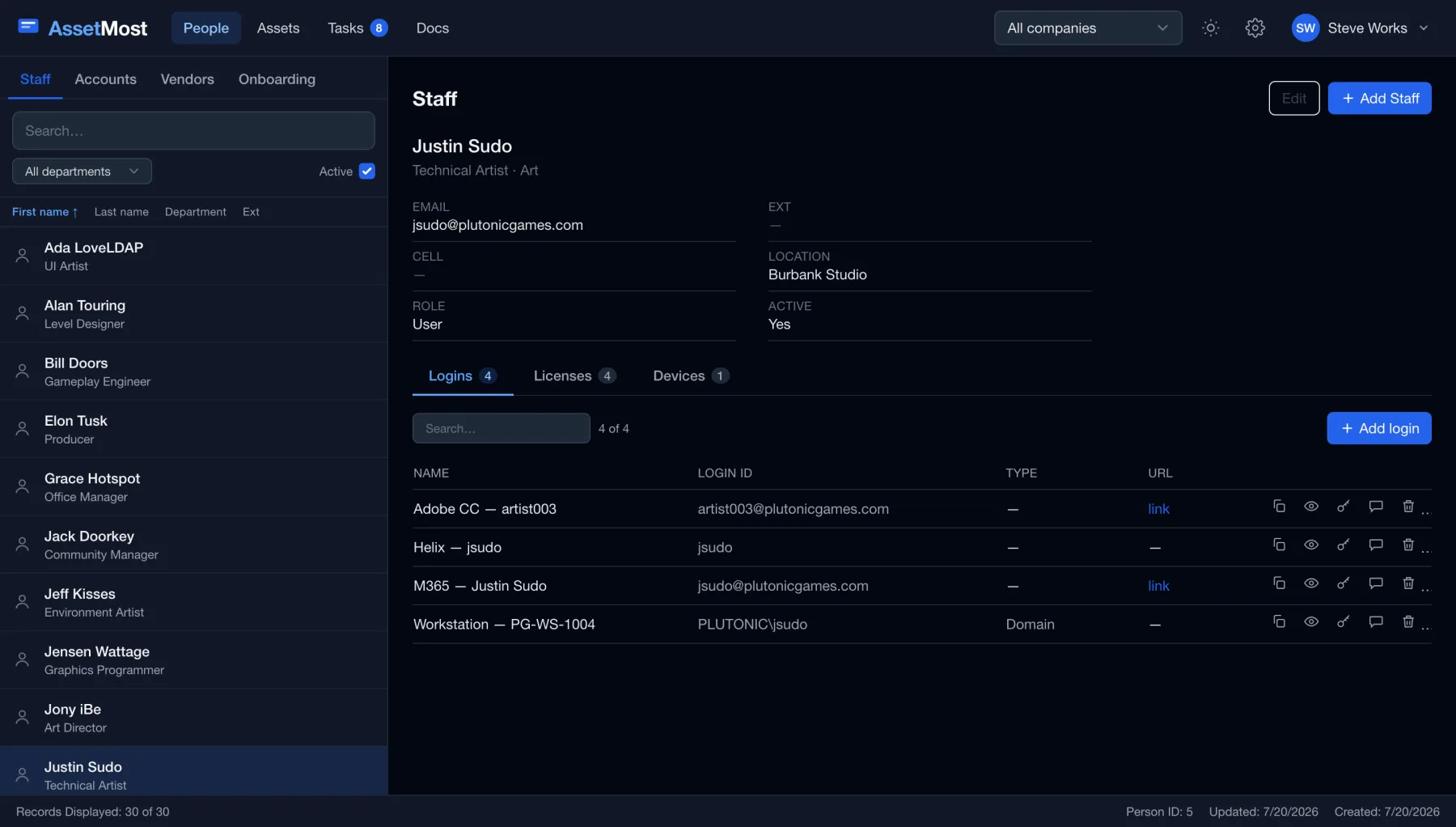
Staff, and everything tied to them

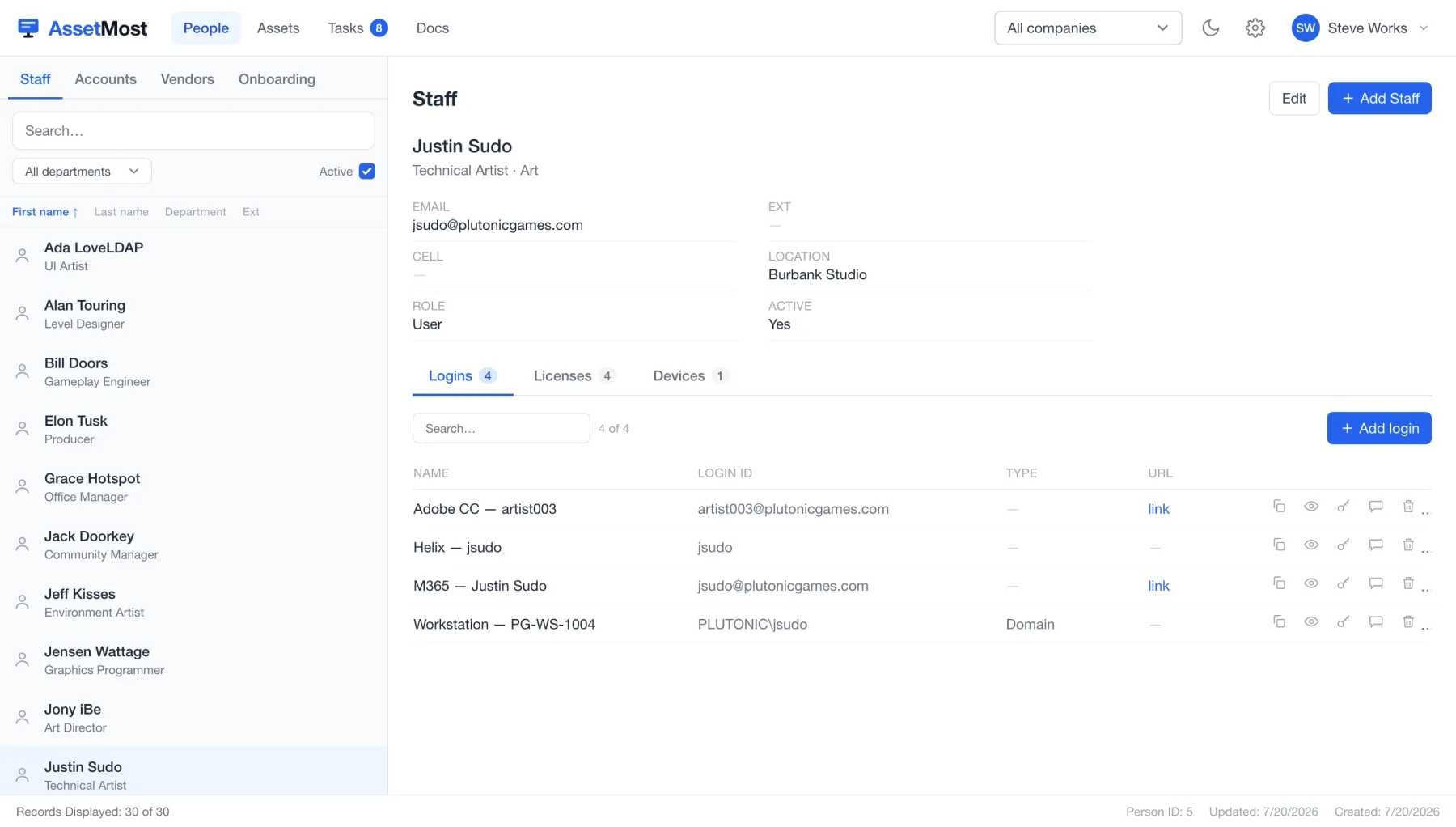
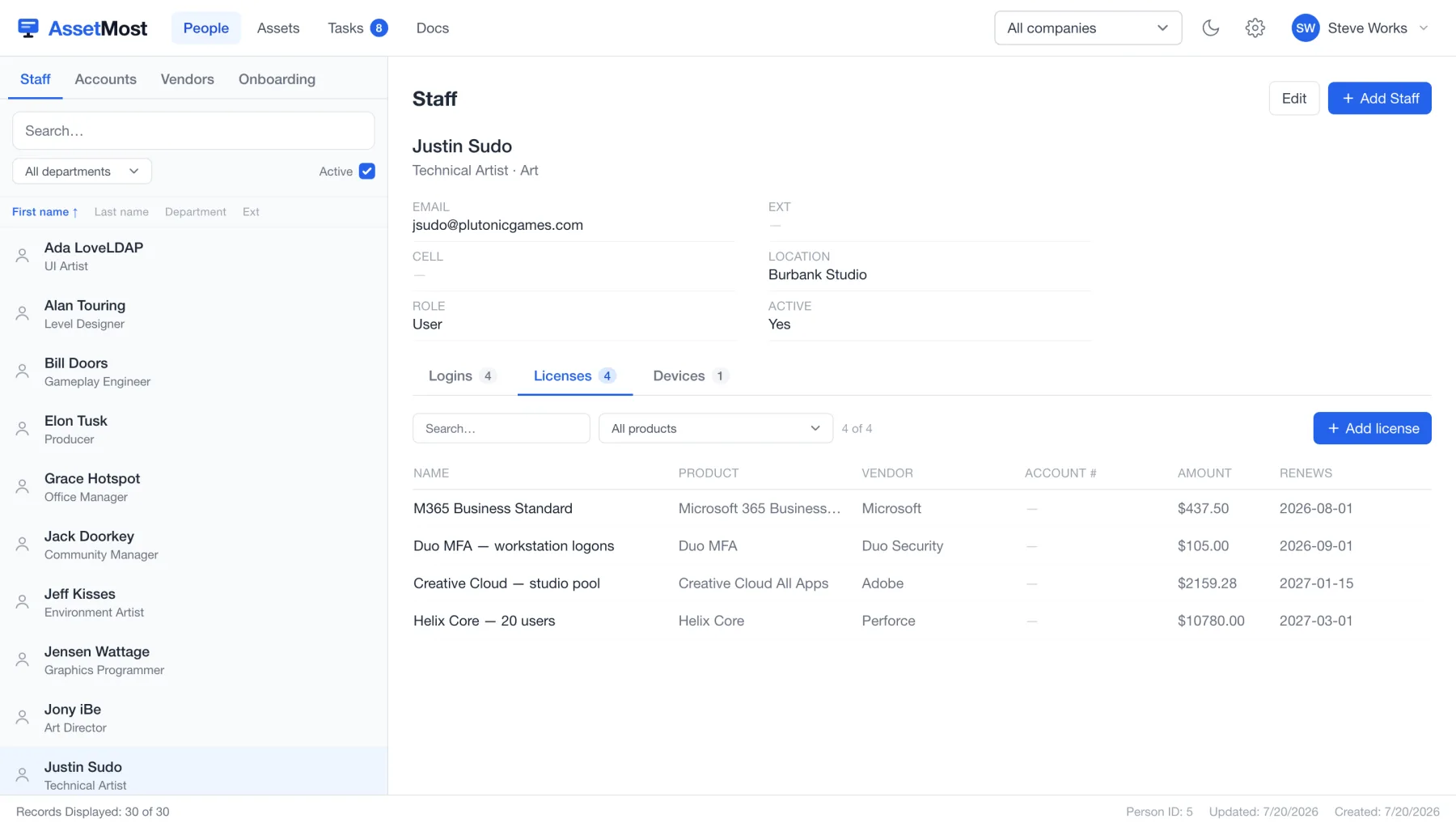
Every person, their devices, their accounts, and what they're licensed for — in one profile.

  • Devices, logins, and license seats on one screen
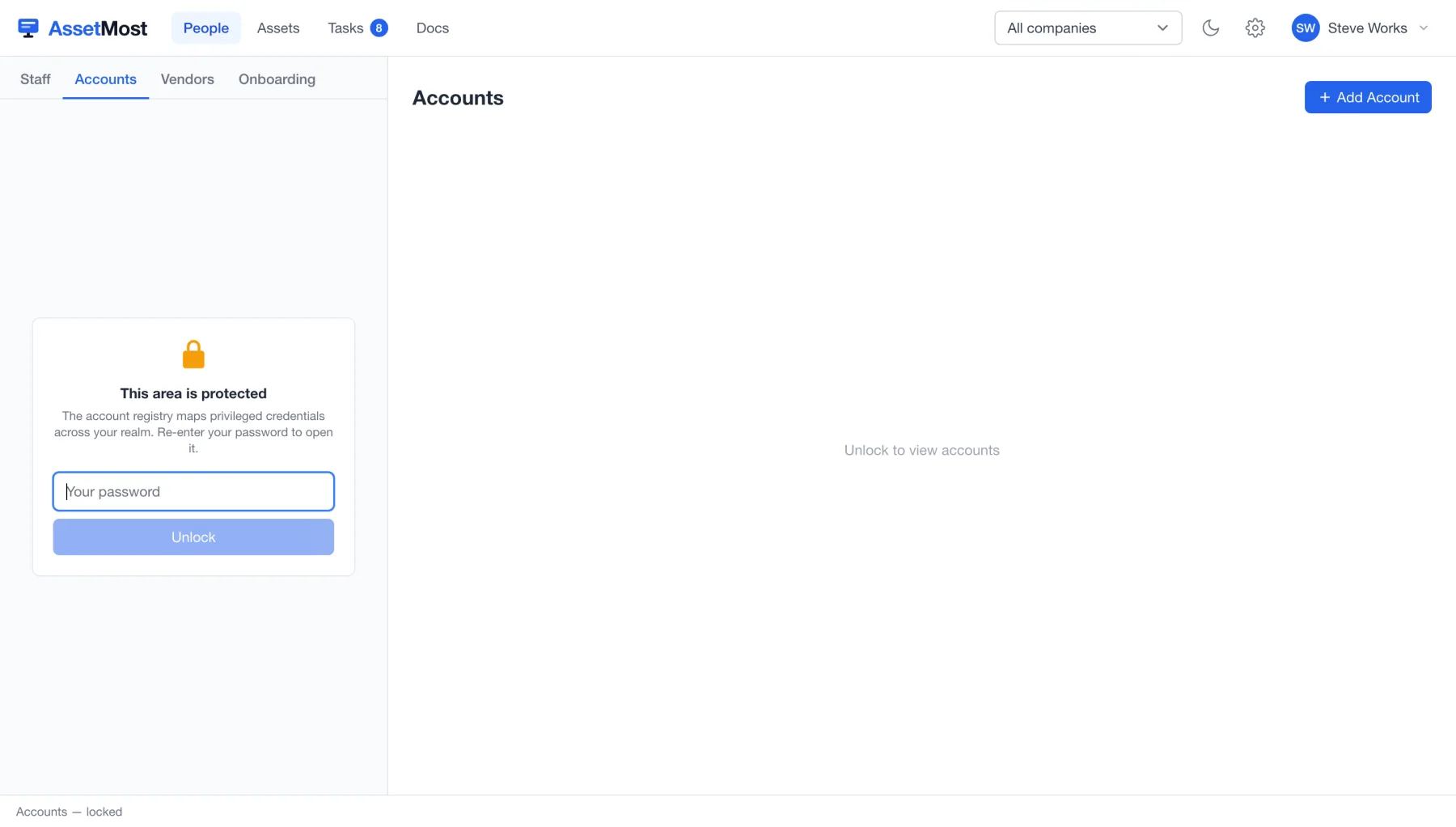
  • Shared and pooled accounts handled as they really are
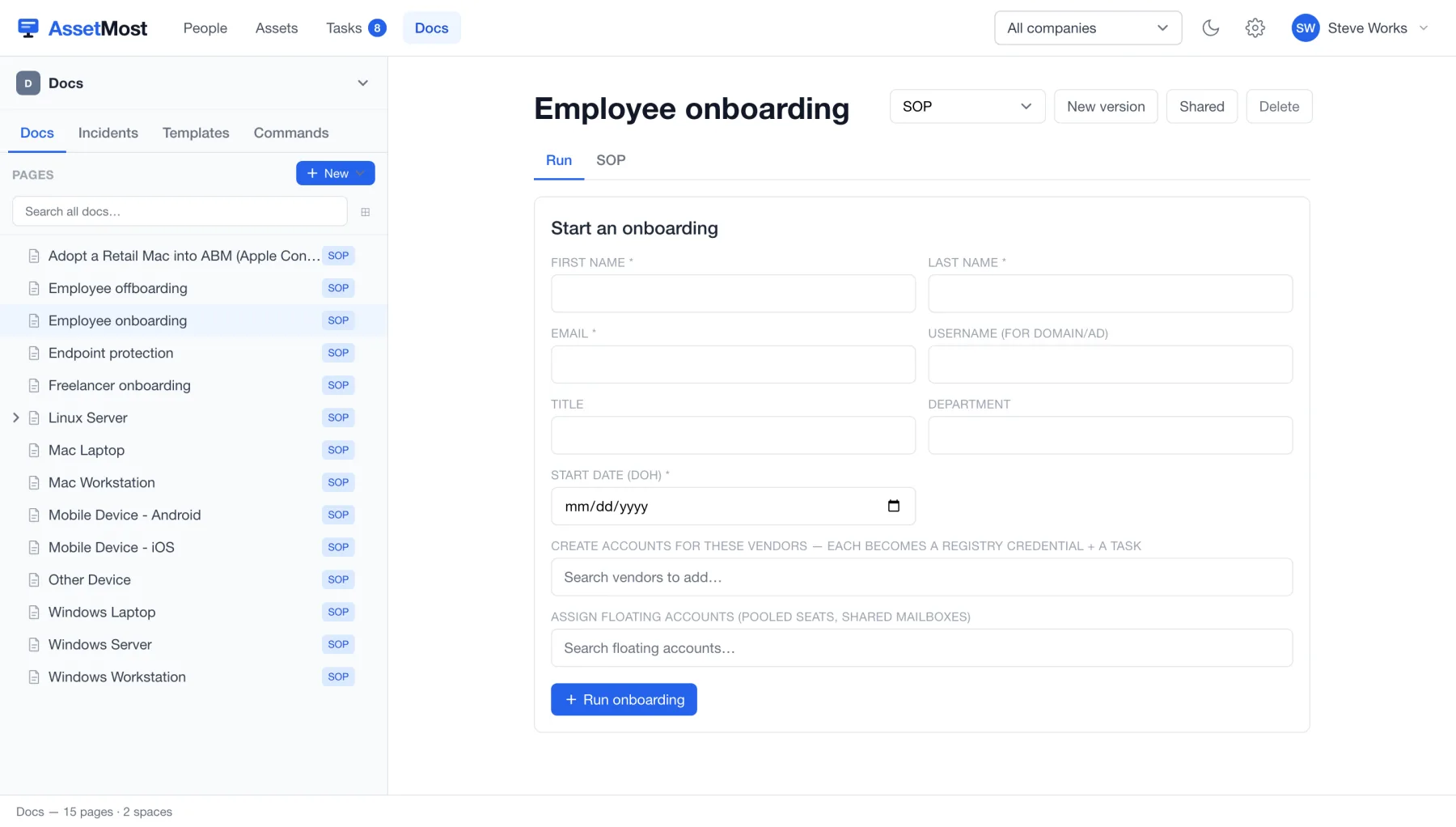
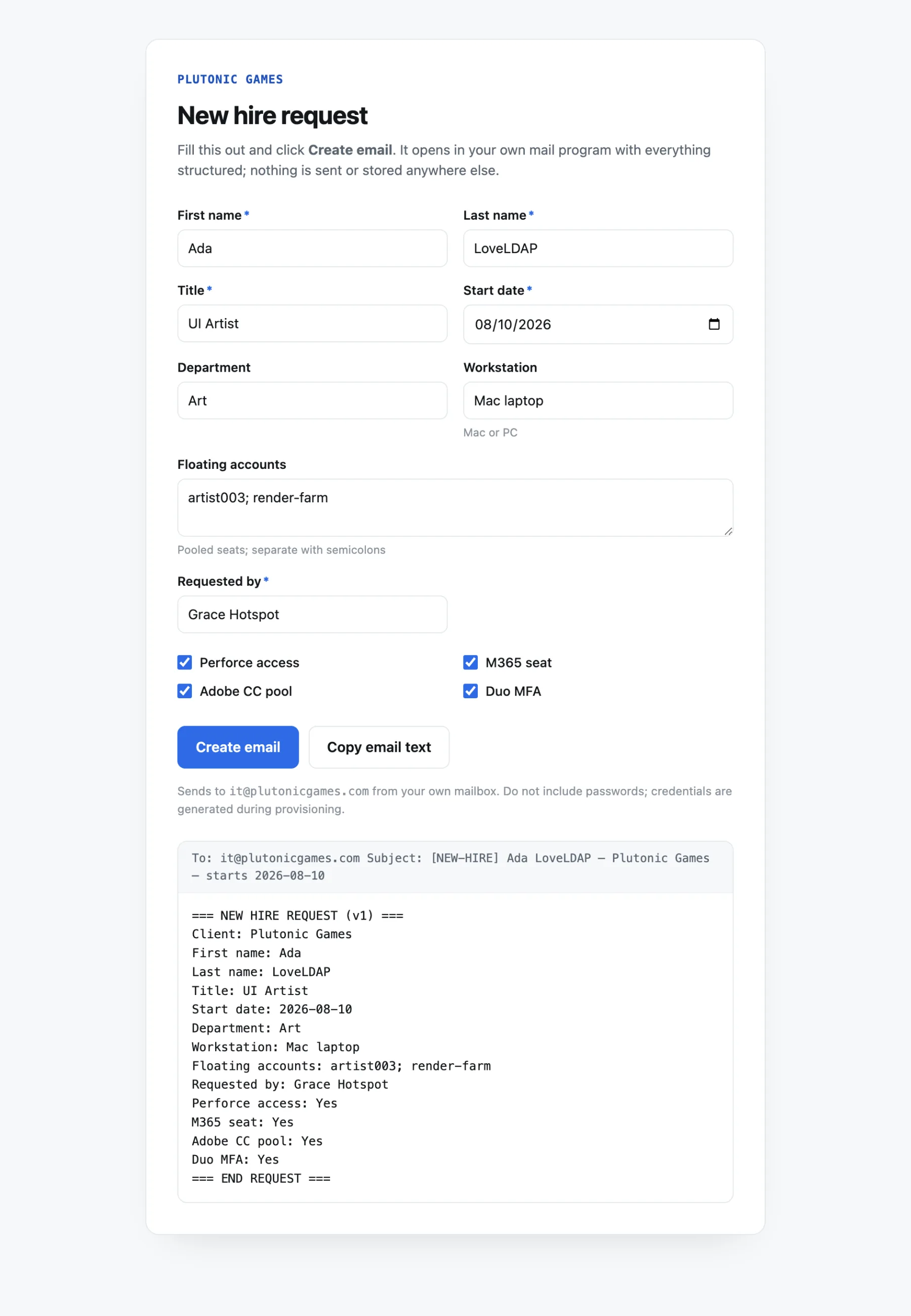
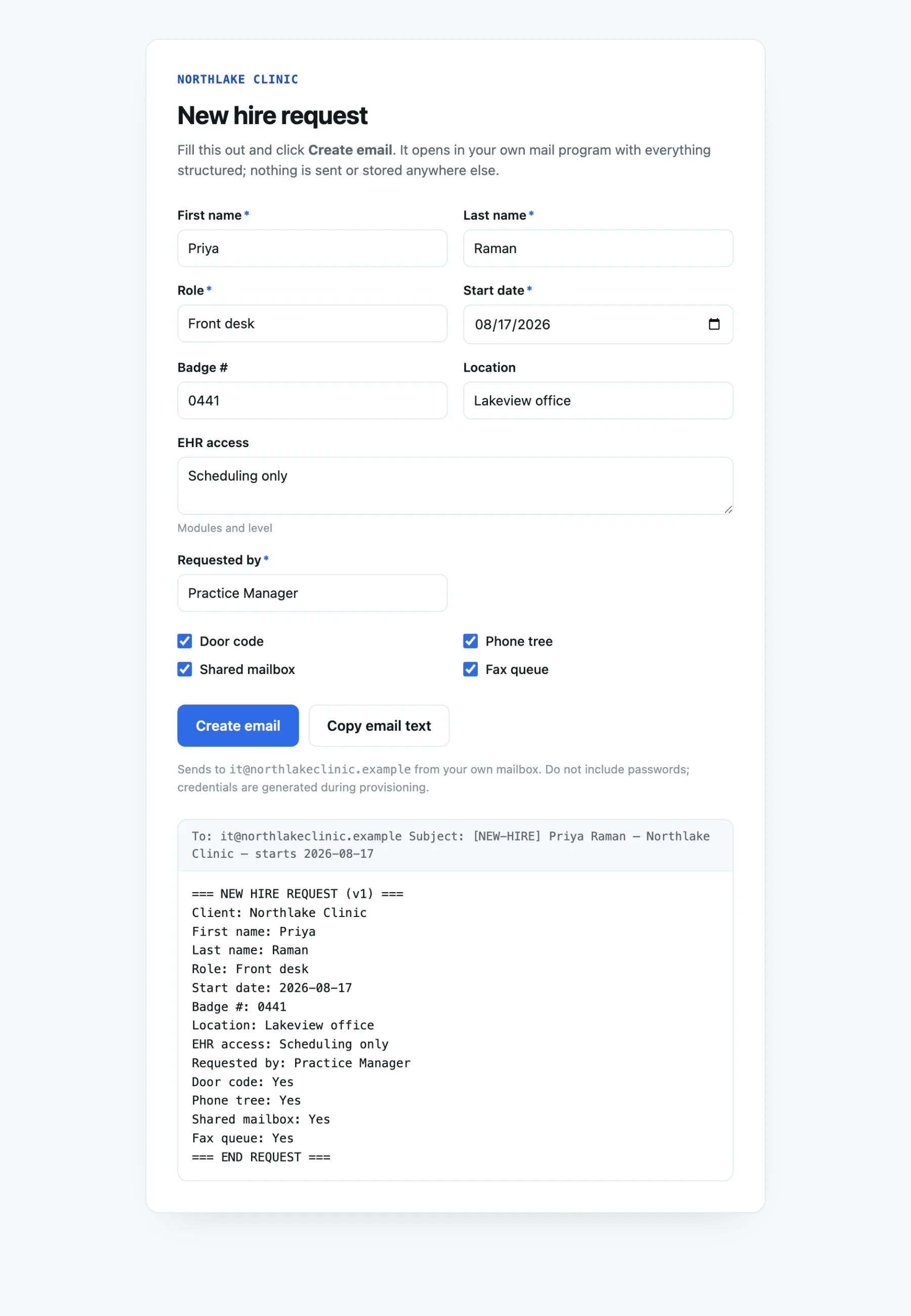
  • Onboard and offboard without the checklist living in your head
Assets

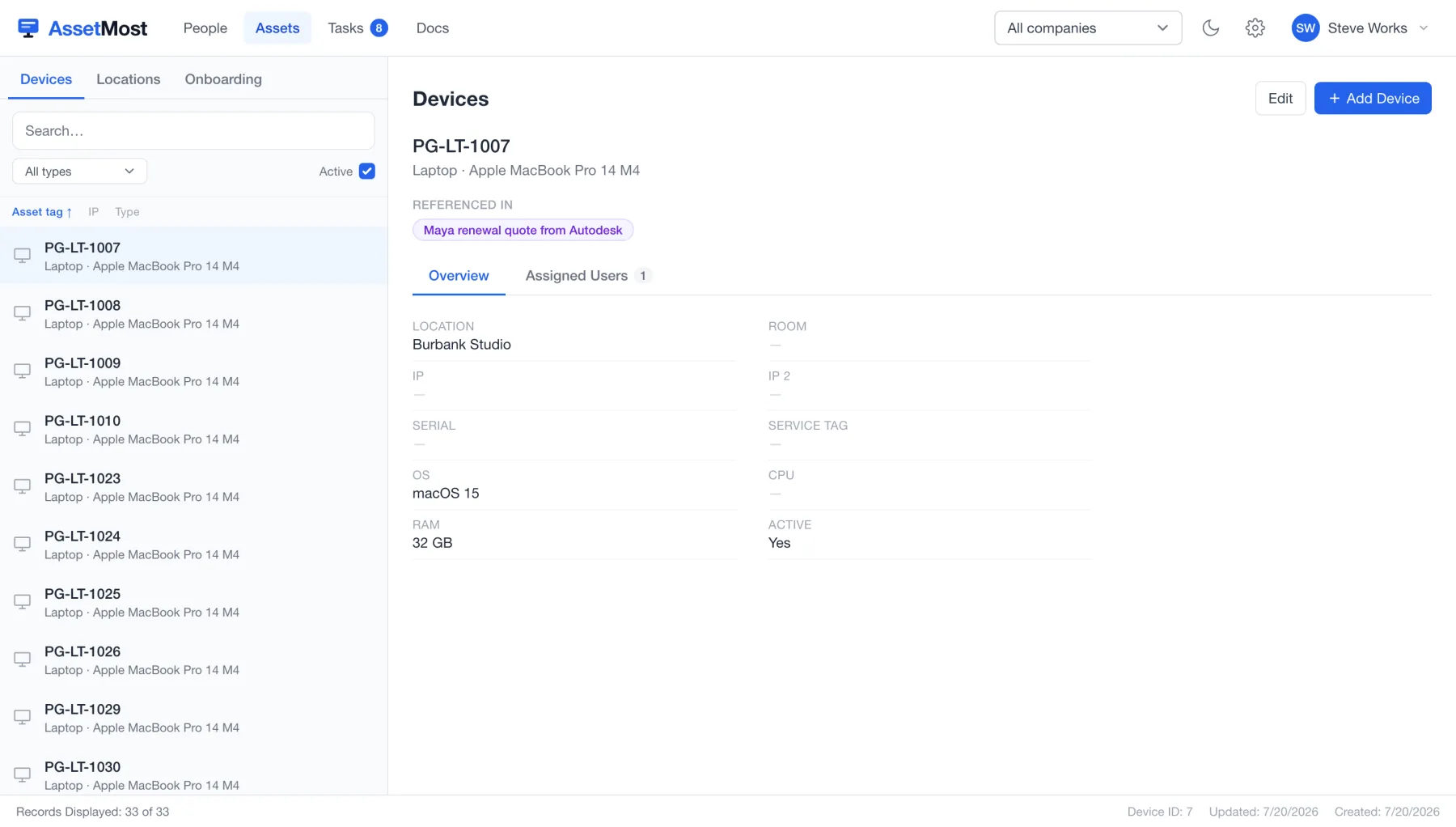
Hardware from intake to e-waste

Placed in a room, assigned to a person, with an asset tag that means something.

  • Auto-issued asset tags — HC-WS511, not a serial number
  • Rooms and locations, so "what's in 104B?" has an answer
  • Full lifecycle: intake → assigned → retired → e-waste
Credentials

Vendor → product → seat → holder

The way licensing actually flows — including the shared mailboxes and pooled logins nobody else models.

  • See who actually holds each seat
  • Answer "who has an Adobe seat?" in seconds
  • Shared accounts that get handed between people, tracked
Work

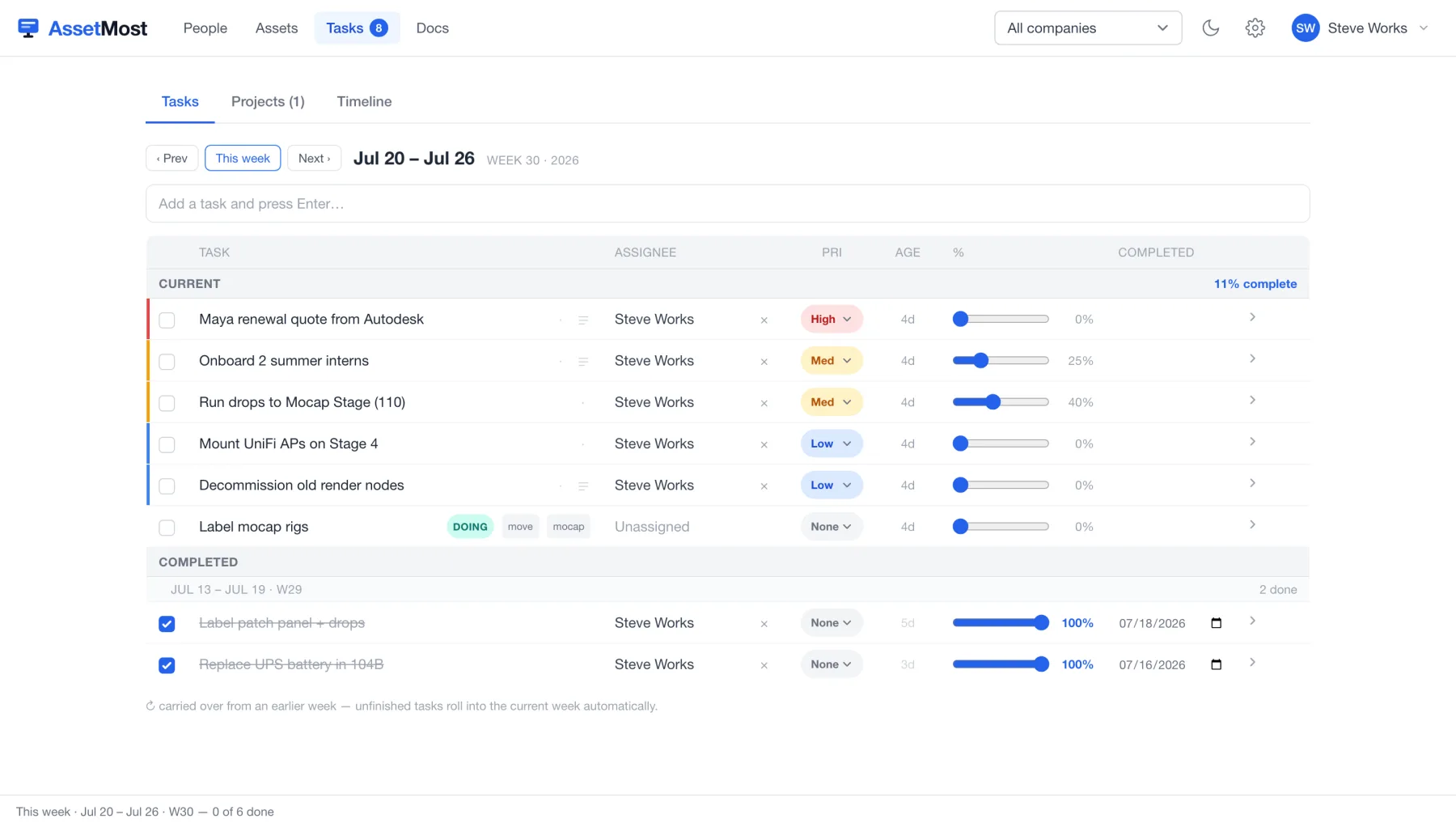
Work that remembers itself

A weekly rolling board where unfinished work carries forward — and a solved ticket becomes a runbook, not a problem you solve again next year.

  • Unfinished tasks roll into the current week automatically
  • Turn any task into an SOP or playbook — it always was one
  • Run big projects without administering a big tool
The whole idea

It isn't the best at any one of these. It's the only place they connect.

Best-in-class tools each know one thing and nothing else, so the connections end up in a spreadsheet, six browser bookmarks with six separate logins, or a person's memory. AssetMost keeps them in the system.

Who has an Adobe seat? What's in room 104B? What's this credential for?